
LET’S DO THINGS ON PURPOSE, TOGETHER.
Welcome, internet friend! You’ve just stumbled upon Ben Mosior, an absurd but friendly methodology whisperer who specializes in unorthodox ways to intentionally think, know, and do.
About Ben
With 9 years of experience in the strategy education industry, Ben Mosior is a seasoned consultant dedicated to empowering individuals and organizations to make strategic decisions with care and intention. He holds a B.S. in Computer Science from Shippensburg University of Pennsylvania.
Ben’s career spans diverse sectors including government, healthcare, software development consulting, and knowledge management. He transitioned into management consulting with PraxisFlow, where he co-designed and facilitated learning experiences on Anticipatory Awareness, Situational Awareness, and Strategic Intent, in addition to co-developing novel Organizational Design methodologies.
In 2018, Ben founded Hired Thought to provide strategy education, facilitate team alignment, and offer client advisory with a focus on Wardley Mapping. Under Hired Thought, he created LearnWardleyMapping.com, the leading resource for Wardley Mapping education. He also co-authored the Strategy Tactics Pip Deck with David Holl of Postobject, with whom he also co-created The Game of Wardley.
Ben’s clients frequently praise his exceptional teaching and facilitation skills, highlighting his ability to make complex concepts clear and engaging. He excels in creating interactive, hands-on learning experiences that are both inspiring and fun. Ben’s expertise includes market analysis with open source intelligence, graphic facilitation, client advisory, system design, Transition Design, Wardley Mapping, and more.
Ben believes that strategy is for everyone, not just those with formal authority. He emphasizes thoughtful, care-ful approaches to decision-making. His problem-solving approach involves holding space for clients to find their footing, offering guidance and encouragement, and fostering an attitude of learning and improvement.
As an experienced facilitator of online workshops, Ben knows to prioritize participant energy levels, effective use of time, and session objectives (in that order). He is committed to delivering on promises and guiding clients towards realistic and achievable expectations. His consulting style is distinguished by kindness, thoughtfulness, and genuine care, treating clients as partners in the work.
Ben has contributed to various publications, including Foresight as Anxiety Containment in the Yak Collective’s Don’t Waste the Reboot and Understand context and diminish risk: How to build your first Wardley Map for the Miro blog. He also edited and published Wardley Maps by Simon Wardley and created the Wardley Mapping Workbook.

Speaking
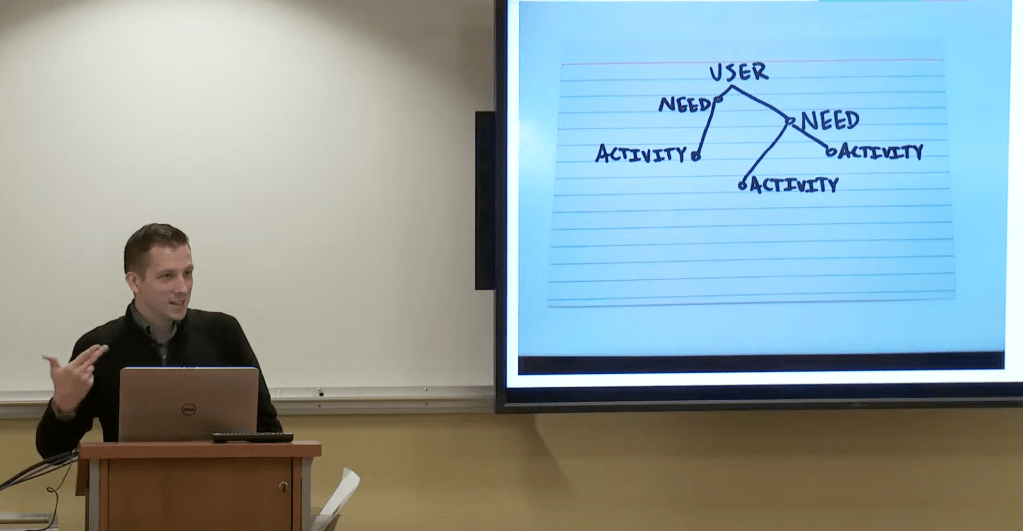
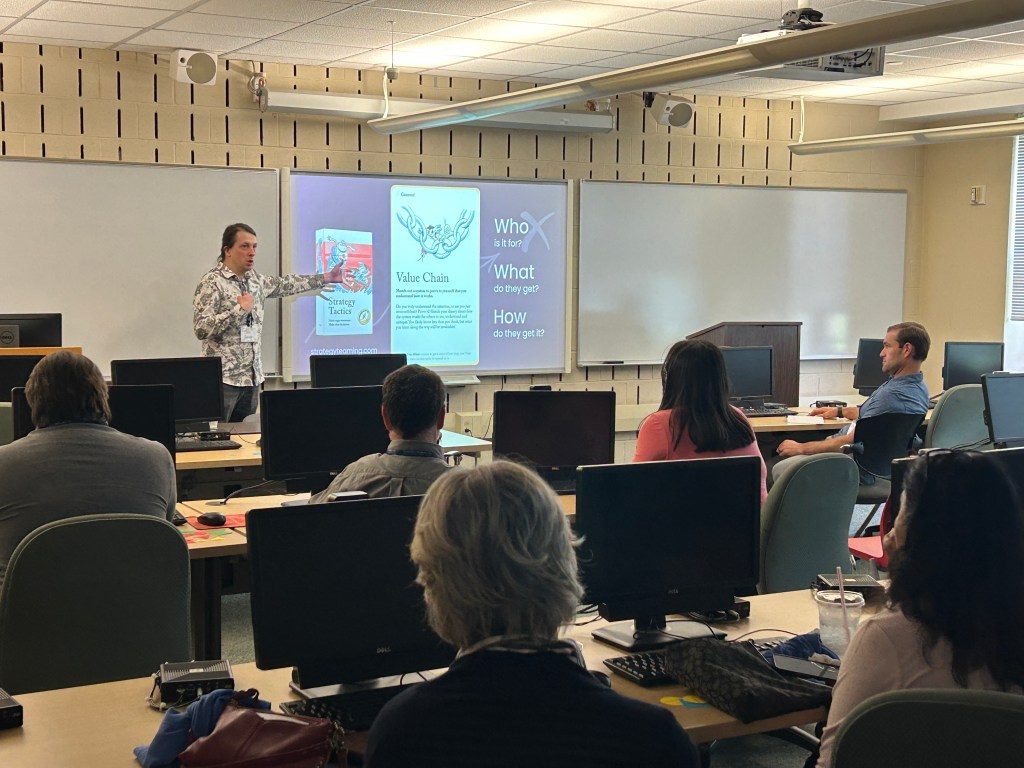
Ben is happy to speak at your conference or workplace on Strategy, Wardley Mapping, and more.
Here he is speaking at:
- Product Camp 2025
- Map Camp 2024
- Red Hat Open Shift Commons
- Map Camp 2020
- VuFind Summit 2017
The Pip Deck
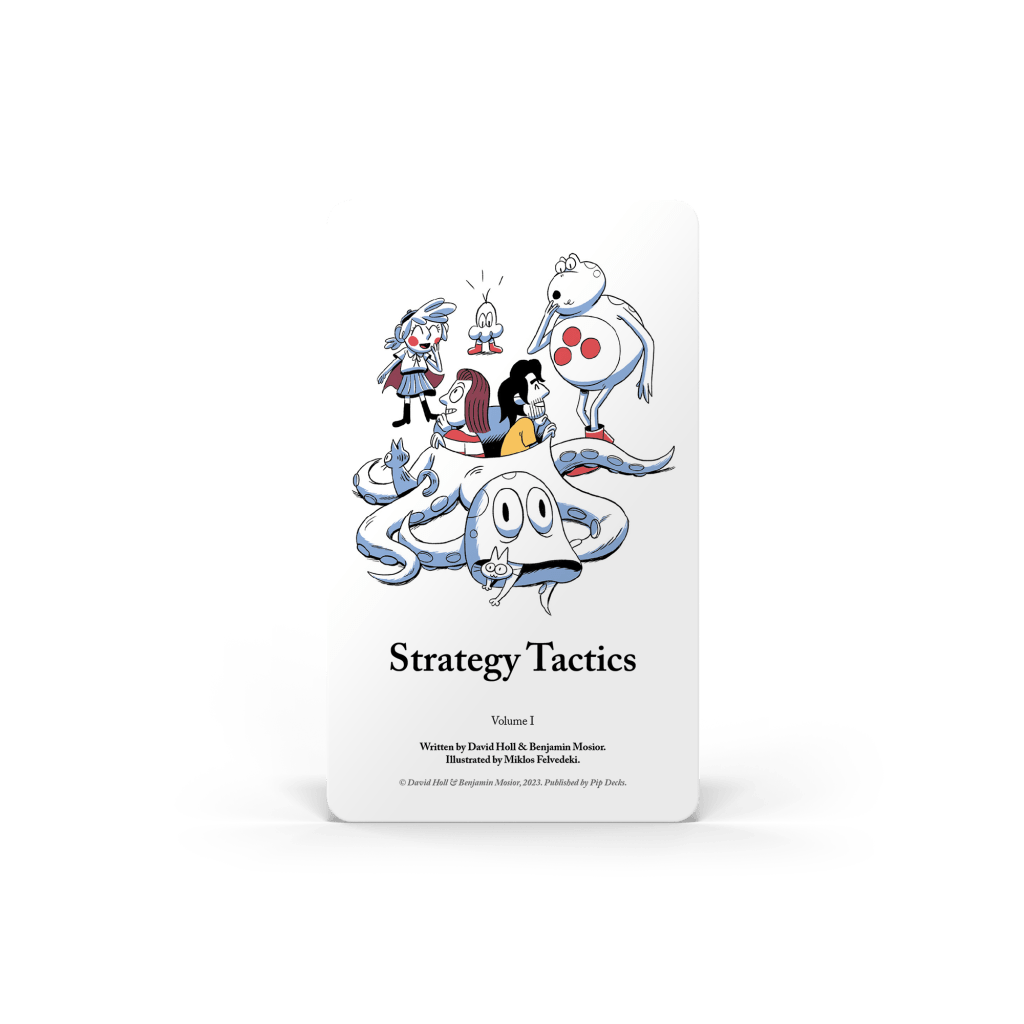
Ben co-authored the Strategy Tactics Pip Deck along with David Holl.
54 frameworks, prompts, and exercises to help you confidently make important decisions about strategy at work.
Want to work with Ben?
Ben Mosior and David Holl combine forces to provide brilliant strategy experiences for teams.
Bring the clarity, alignment, and energy your team needs to accomplish incredible things and feel great while doing it!

Say hello!
Got a burning question? Come say hello!


Ben’s Writing

Proof of Human Performance: A Process Focus for AI Detection
Students and organizations alike are embedding GenAI into their work without understanding the consequences for others and themselves. Simultaneously, we’re only just beginning to understand how others can use AI to influence, defraud, and shape our world in subtle but important ways. A common cliche I encounter is the assertion that “AI is just another…

Things I do when I start a consulting project.
This is a lightly-edited reproduction of a thread I originally posted to Twitter in May of 2021. When I begin a new consulting project, I start by creating a new folder under my ‘Projects’ using Tiago Forte’s P.A.R.A. organizational structure (see bonus section at the bottom of this post). The first thing in my new…

Your Ideal January 1st
Here’s how to start 2023 off right — not with some far off imaginary nonsense, but with a concrete design for the here-and-now. Today we’re venturing outside of Wardley Mapping to a complementary planning method called the “Ideal Present,” which comes from the PhD work of Jabe Bloom (please cite him if you use the below in…

6 years is a long time
Tasshin is a good friend, in every sense. We’ve talked much over the years about strategy and intentional being and doing. In the latter link, he discusses Power, Maximum Deep Benefit, Cynefin, Iteration, Conditions/Consequences, The Expected and the Unexpected, Wardley Mapping, Burja Mapping, The Theory of Constraints, The Logical Thinking Process, Alliances, SWOT, Westrum Typology,…

Easy Come, Easy Go
Twitter is a sad, unsurprising story. But I’m comforted by some good news: All things are temporary, even platforms. I’ve come to accept that all content I produce on someone else’s platform is impermanent. But it’s important to note: Some platforms are less impermanent than others. In light of Twitter’s mess, I’ve embraced three alternative…

Millstones and Learned Hopelessness
Learned Helplessness is something that happens when someone’s agency (as in, their ability to make decisions, take actions, and see the impact those actions have on the world) gradually, persistently gets eroded away. When that erosion has gone on long enough, that someone stops believing that their actions matter. They go with the flow of…

Ontological Pluralism
Ontological Pluralism is an idea put forward by Arturo Escobar in his book Designs for the Pluriverse. The more I think about it, the more it messes me up. I’m sure I’m getting it wrong in important ways, but the basic idea as I understand it is a flavor of live-and-let-live focused on which futures…

5 Lessons From a Decade of Marriage
A letter written to a newlywed couple. The truth is, marriage is extremely rewarding. It is also extremely difficult. We’ve learned many hard lessons about building a good marriage over the last decade, and we’re sharing the ones that have helped us the most below. (We’re hopeful that what took us eleven years to learn…

Cynefin with Examples
Cynefin is a public domain (citation needed), complexity-centered framework for sense-making. There are 5 ontological domains (you can call them quadrants if you want to piss off certain corners of the internet) — Clear (formerly Simple/Obvious), Complicated, Complex, Chaotic, and Disorder. Each domain suggests its own specific way of being. I’m going to describe this…

Tasshin Interviews Ben on Strategy
This is a rapidfire overview of strategic methods that Tasshin Fogleman and I recorded back in July of 2020. He’s edited it together for the Reach Truth Podcast, which you can check out at his YouTube channel here. I recommend watching the video directly on YouTube, since there are important links in the description that…

Donald A Schön at Iowa State University (Talk Transcript)
When intuitive, spontaneous performance yields nothing more than the results expected for it, then we tend not to think about it. But when intuitive performance leads to surprises, pleasing and promising or unwanted, we may respond by reflecting-in-action. Donald A Schön, The Reflective Practitioner: How Professionals Think in Action To read the transcript alongside the…
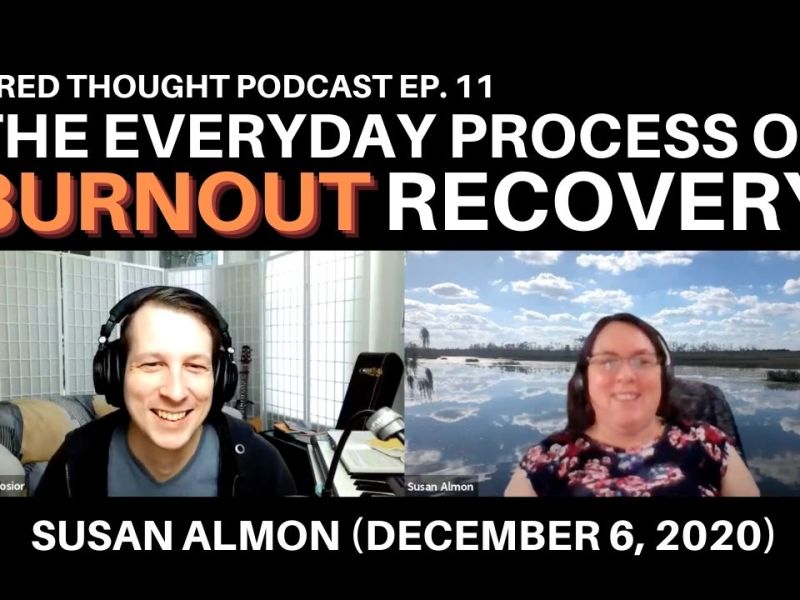
The Everyday Process of Burnout Recovery
Susan Almon joins Ben to discuss the long, hard journey of recovering from burnout.

Meaning Making Machines (Jennifer Carlston)
Ben and Jenny discuss the absurdity of life, how to create and test learning models, and a unique approach to experience sharing known as “kything.”

Anticipatory Awareness and the Election
The anxiety I feel about the actions of the Trump administration over the last few years reaches a new crescendo as Nov 3rd, 2020 rolls around. Instead of cycling endlessly through various “what-ifs,” I am going to make use of a technique I teach others, useful for both corporate horizon scanning and personal anxiety management.…

Principles vs Context: It’s Not About Choice
For Map Camp 2020, I had the absolute privilege of co-delivering a session with Farrah Campbell and Cat Swetel on principles in Wardley Mapping.

Ten Heuristics for Bad Times
A heuristic is a cognitive shortcut for decision-making. It is not guaranteed to be rational or even correct. It serves only to help you get to “good enough” in the short term. Here are ten to try in bad times…
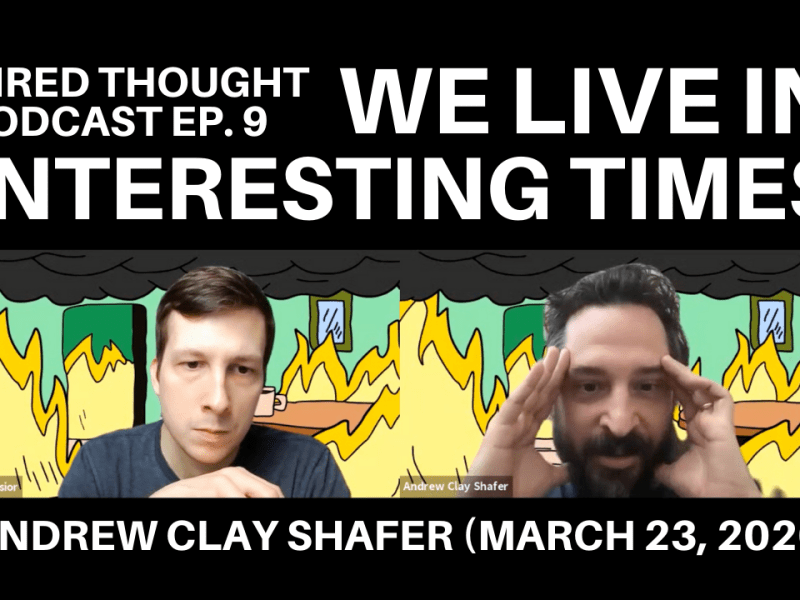
We Live in Interesting Times (Andrew Clay Shafer)
In the midst of a pandemic, Andrew Clay Shafer and Ben Mosior talk transformation, hope, and civic duty. Recorded March 23, 2020.
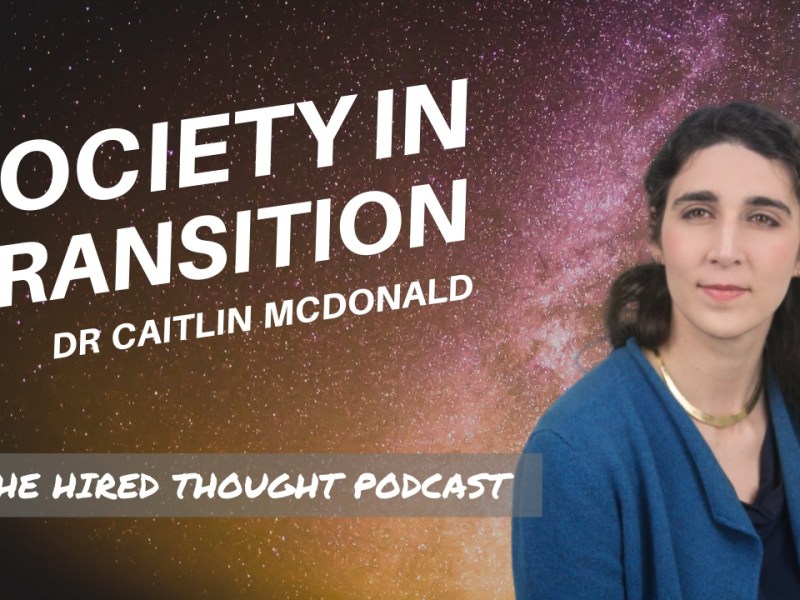
Society in Transition (Dr. Caitlin McDonald)
COVID-19 is changing our society, but how are we coping? Ben is joined by digital anthropologist Dr. Caitlin McDonald to discuss our collective re-examination of common assumptions about work, community, and life.

Language Is Key, but Context Is King (Dean DiStasio)
Ben is joined by artist Dean Distasio to explore what it takes to create transformative conversations through complexity-informed artistic works. Dean shares his process and offers unique perspective on networks, narrative, and the importance of language and context.

Organizational Resilience (Matt Stratton)
Legendary DevOps friend Matt Stratton joins Ben for a discussion on the very near and dear topic of organizational trauma. Matt shares important lessons from his experiences, as well as a few secrets to building organizational resilience through incident response. (Content warning: General discussion of trauma.)

Building Bridges (Colleen Esposito)
Ben is joined by Colleen Esposito, an agile coach and self-described bridge-builder with an incredible set of unique experiences spanning finance, software development, project management, and even home renovation. She and Ben explore the complexity of engaging with organizations as an outsider and what it really means to change the way we work. Colleen Recommends:…
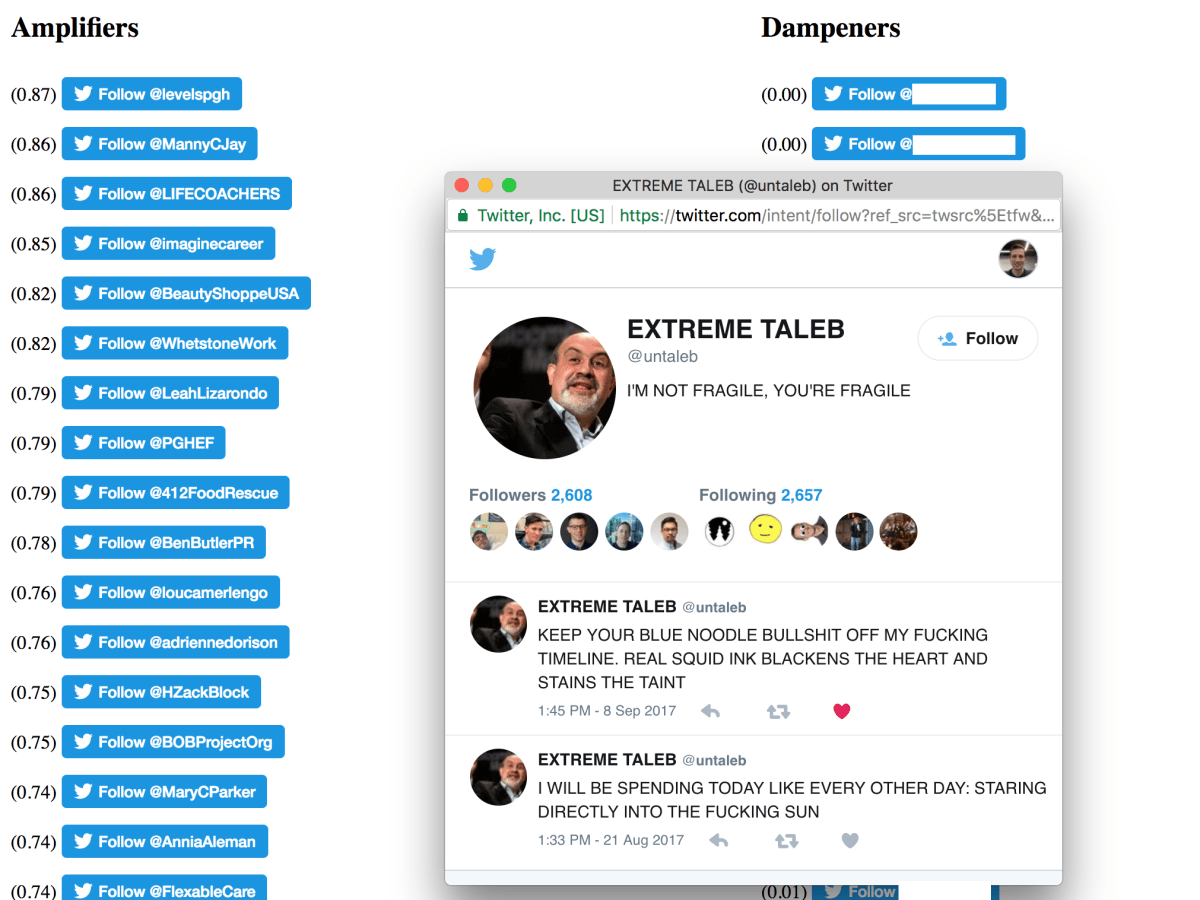
A Broken Compass: Sentiment Analysis in the Tweetstream
About a year ago, I became acutely aware that my consumption of Twitter was becoming increasingly entangled with elevated levels of anxiety. Twitter has long been a wonderful way to connect with cool people I can’t always see in person, so I didn’t appreciate how my experience with it was souring. I began searching for…
Implicit Guidance (Mario Platt & Ben Ford)
Special guests Mario Platt (Privacy Beacon) and Ben Ford (Commando Development) join Ben Mosior for an extensive discussion of the OODA Loop, the Cynefin Framework, and Derek M. C. Yuen’s book, Deciphering Sun Tzu. Boyd: The Fighter Pilot Who Changed the Art of War Thinking in Bets The Evolution of Wealth Deciphering Sun Tzu Loon…
How are you doing as a human? (Toby Sola)
This episode features a thoughtful discussion with Toby Sola, Co-Founder & CPO of Brightmind, a meditation app for managing stress and anxiety. Ben and Toby explore the intersection of meditation and technology, as well as how to start inviting contemplative practice into your workplace. Our mutual friend Tasshin Shinzen Young The Monastic Academy Meditating in…

The Reluctant Devop: Heretical Anthropology (Anthony Mastrean)
Ben kicks off episode 2 with Anthony Mastrean, a friend, colleague, and professional organizational agitator. They discuss the origin story leading to their work together, what it’s like changing an organization from the inside, and the underrated discipline of Software Configuration Management. Steven Shorrock: The Varieties of Human Work Tasshin Fogleman: Burja Mapping Discussion with…

On Understanding the Self: Mapping and the Annual Review
Back when I thought I needed to work in cubicles the rest of my life, I did something similar to this with mapping. I believe @kelseyhightower has as well. I do wish I had @MaturityMapping at my fingertips back then. It might have helped me struggle less. Oh, was I ever fighting myself while trying to figure out how…
The Integrative Approach: When the Opportunities Reveal Themselves (Ryan Wold)
Ben is joined by Ryan Wold for the very first episode of the Hired Thought Podcast. They talk about the sociotechnical nature of organizations, and what it’s like to integrate a larger view of the system across functional boundaries. The Shape of Strategy Simon Wardley’s 100 Day Corporate Get Fit Plan Map Camp Slack Follow…
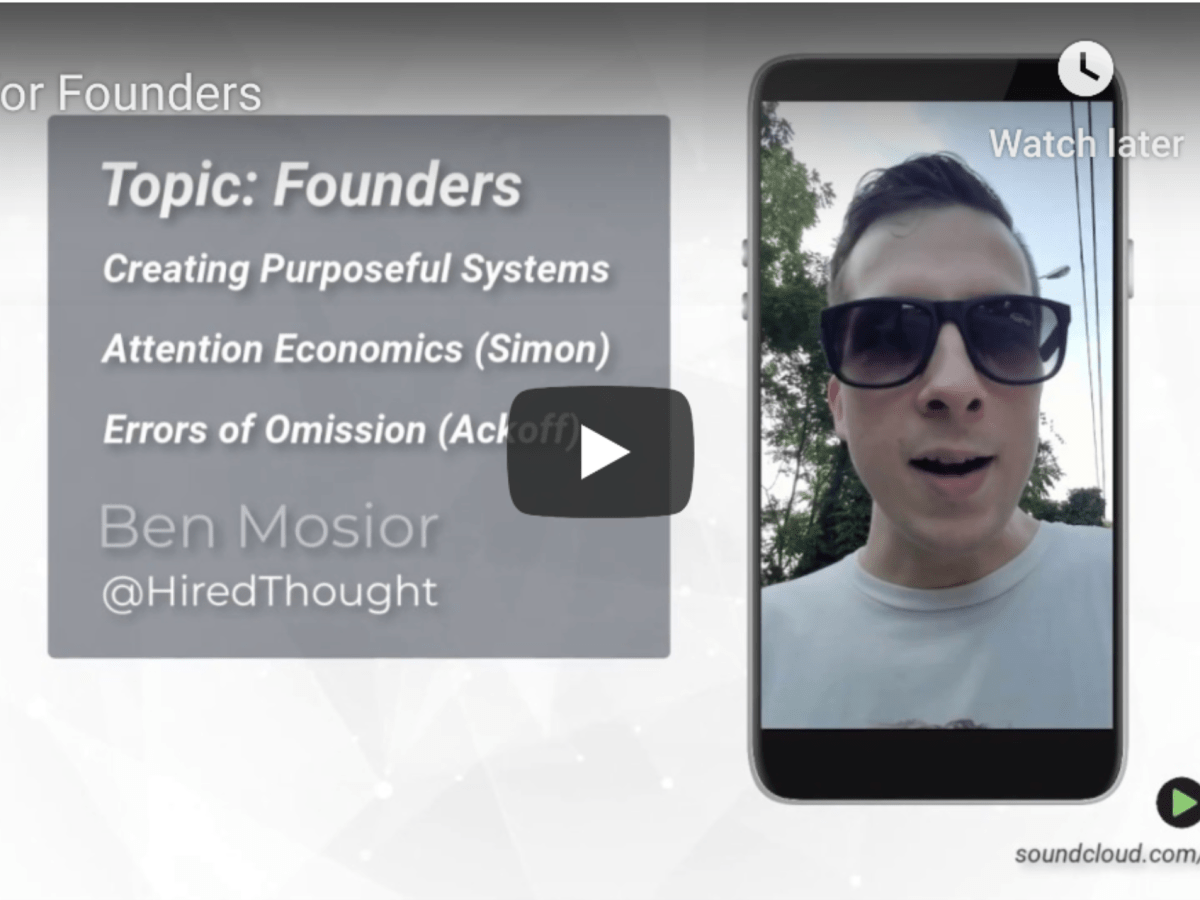
For Founders
Let’s talk about purposeful organizations, the overwhelm of too many sources of information, and what errors to avoid as a founder. [I]n an information-rich world, the wealth of information means a dearth of something else: a scarcity of whatever it is that information consumes. What information consumes is rather obvious: it consumes the attention of…

Evolution and Being in Genesis
How do you get through beginnings? What does it mean to be in Genesis? If you broke your work (and everything around it) down into parts, which ones are truly in genesis, and which ones have been done before (in other situations by other people)? The trick is to re-use and adapt what others have…
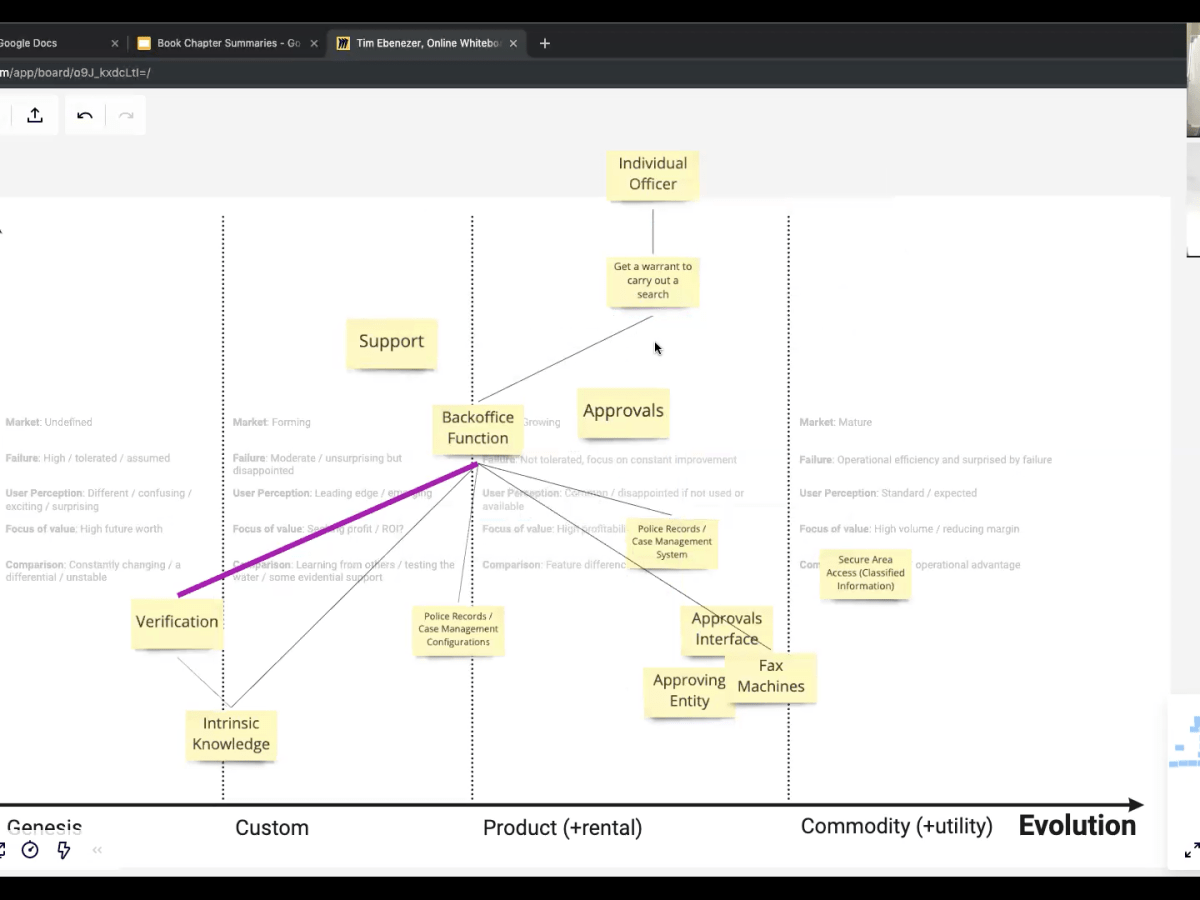
Tim Ebenezer — Mapping Policing in the UK
Absolutely fabulous conversation with Tim Ebenezer on Wardley Mapping and policing in the UK. We walk step-by-step through a hypothetical example, sharing our stories and experiences along the way!

Mario Platt: Evolution-informed Security Strategy
What an absolute privilege it was to host LearnWardleyMapping Professional Member @madplatt! He sets us straight on strategy, security as a constraint vs an enabler, and The Four Problems we must address for an adequate 2020+ security posture.

If Mapping is the solution, what is the problem?
I’ve been wanting to understand what makes Wardley Mapping so incredibly useful to some and so completely inaccessible to others. After a conversation with Chris Donnelly, I offered the following prompt on Twitter: I share my initial thoughts in the video, but I really wanted to hear from the rest of you. Here are some…

“Help” Is a Four-Letter Word
There is helpful help, and then there is unhelpful “help.” Far too much help seems to fall into the latter category, and when someone “helps” — when it’s not asked for, when it presupposes too many incorrect assumptions, and when the relationship is not fair and equitable — the social fabric breaks down and trust…
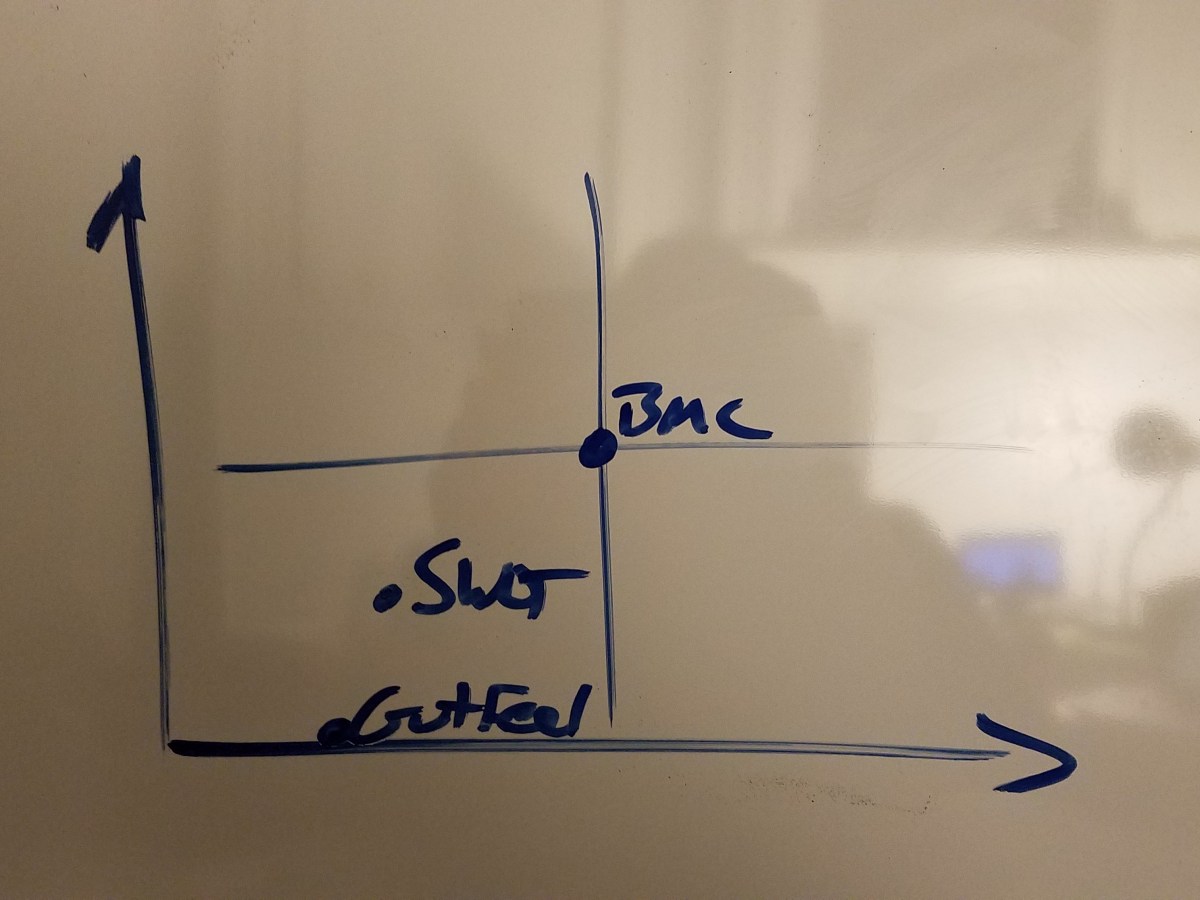
How do you make decisions?
If you use mental models or thinking processes to make sense of things and make decisions, what are the ones you use most? And what are they like? Scroll down to share! I’ll post the findings at a later date, and I’m guessing you’ll learn about some helpful models you’ve never heard of before! Might…

The Conditions for Community
The Conditions for Community There’s an old joke that says you only need two tools in life: Duct tape, for things that move but shouldn’t, and WD-40, for things that don’t move but should. I have both in my toolbox at home, along with a number of other, more specialized pieces of equipment. None invalidate…
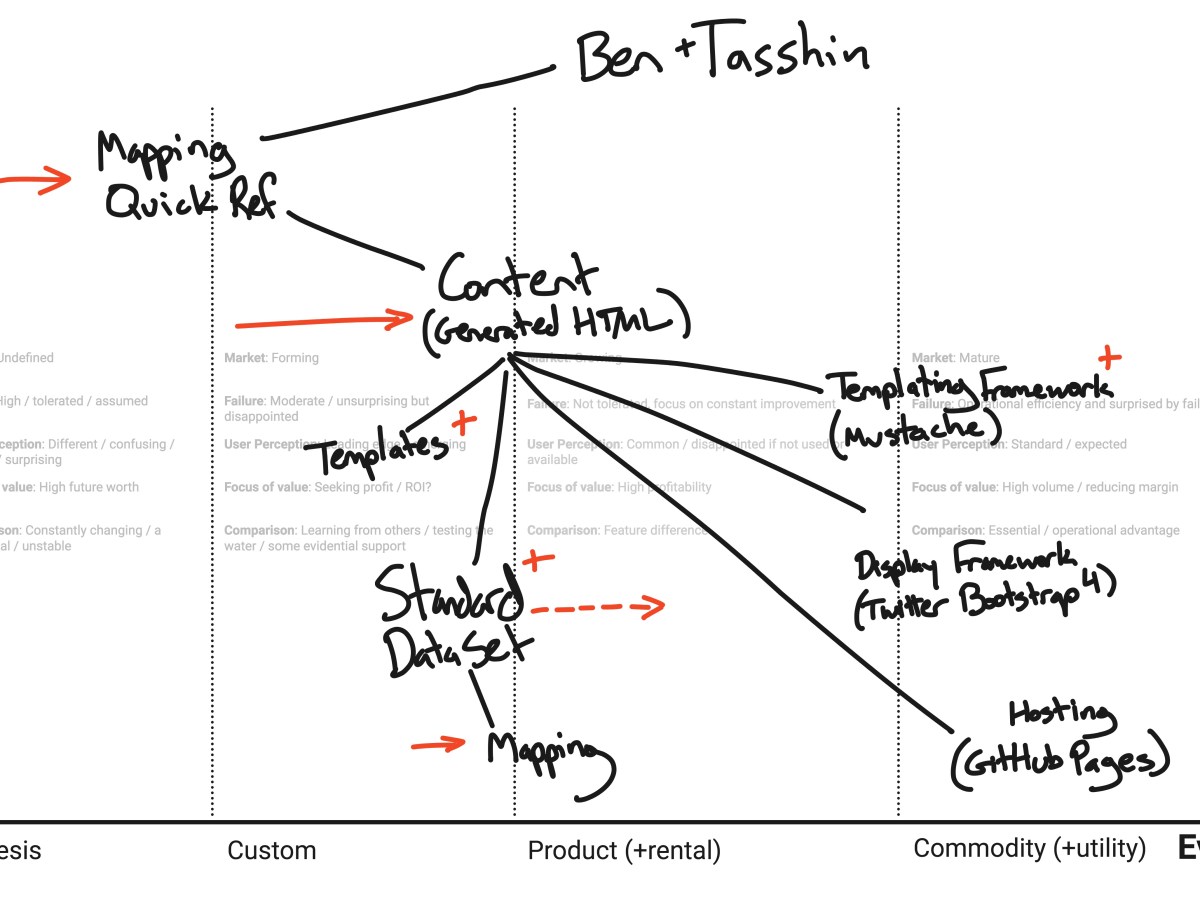
Evolve: A Quick Reference for Wardley Mapping
About two years ago, I was doing quite a bit of Wardley Mapping, and I found myself looking up the same parts of Simon’s blog over and over. At the time I was super interested in information microsites (single-topic sites like this one), so I built one to host the one thing I referenced most…
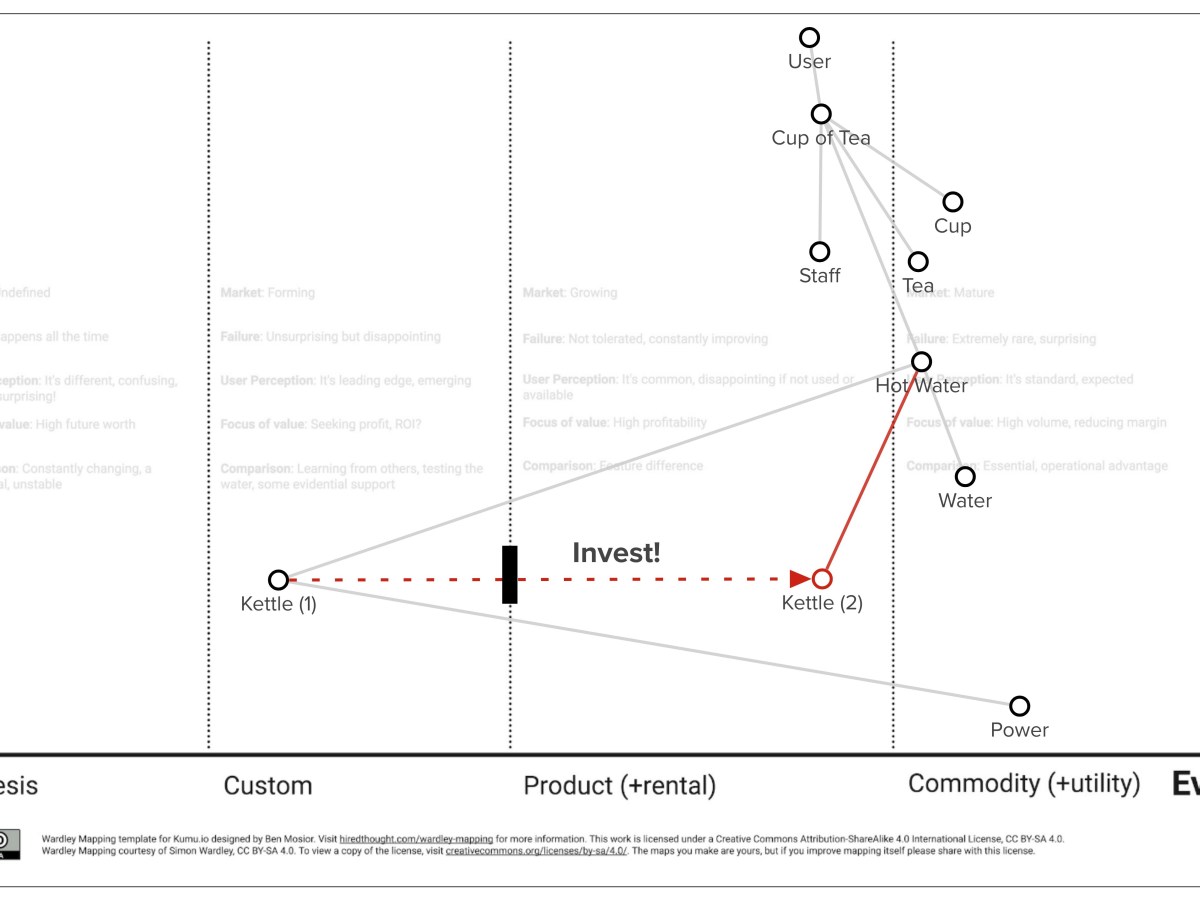
Wardley Mapping on Kumu.io
I’ve noticed that quite a few people have been writing purpose-built software for Wardley Mapping, and lately I’ve been feeling inspired to join them! I had some extra time last Saturday, so I sat down at my laptop in the hopes of hacking together a fancy D3.js prototype. But after very lightly mapping my own…
The Wardley Mapping Canvas
The Wardley Mapping Canvas provides just the right amount of visual structure to help mapping practitioners make quick progress and have a better learning experience while building their first maps. The canvas has been added to the official RealtimeBoard template library (yay!). However, at Map Camp 2018, someone very helpful (whoever you are, please say hello so…

So you want to build a website
Every once in a while, I plan to share something I call a solution blueprint — a way to fulfill a particular business need that I think is universal enough to be offered as general advice for the current moment in time. Something to consider as a safe default. That doesn’t mean there won’t be…
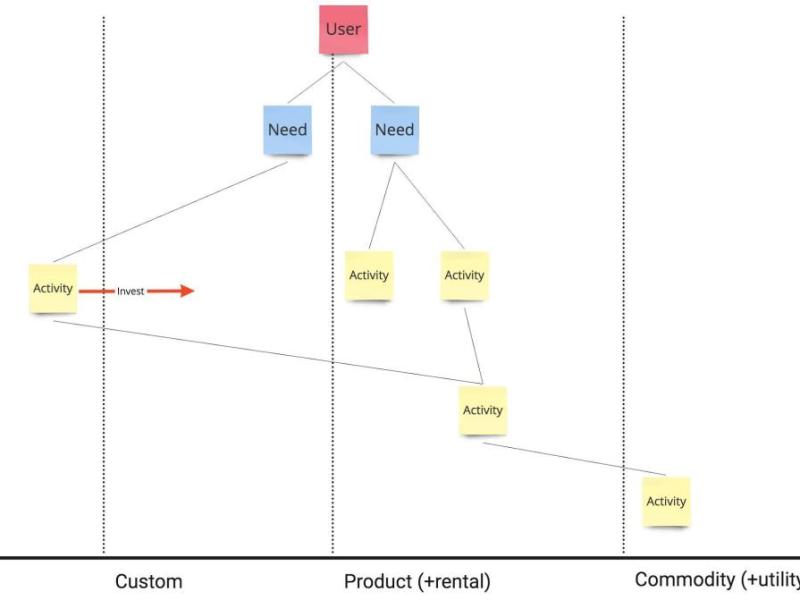
Intro to Wardley Mapping
A hard truth of decision-making is that complete information will never be available. We use tools, techniques, shorthands, and experience-laden aphorisms to fill in the gaps, but they remain inadequate in addressing uncertainty. Our individual coping mechanisms are bespoke, strange, and inconsistent. We struggle with self-contradiction over time. Decisions made tomorrow will unfold differently than…
Deconstructing Ideas
Everything I’m Hoping Is in Your Elevator Pitch When I attend a pitch event, I sit with a notebook in my lap and sketch out a quick value chain of each product or solution while it is being described. At the end of each pitch, I write where I would focus first, were I to begin…

The Five Focusing Steps for Human Systems
I don’t normally read textbooks just for fun. Ok, that’s not true. I wouldn’t normally read this textbook just for fun. It is, however, excellent reference material and worth a skim every once in a while. The textbook is Bill Dettmer’s The Logical Thinking Process, which aims to articulate and standardize the practices described by…
I Hate Shared Folders
Originally from a Tweet thread published in 2017. Shared folders are antithetical to collaboration and team information management. The most responsible way to collaborate is through deliberate, individual file sharing that permits organizational autonomy. Organizational autonomy should be default, shared spaces the exception. Here’s why: Shared spaces are contracts, contingent on agreed-upon practices As with…
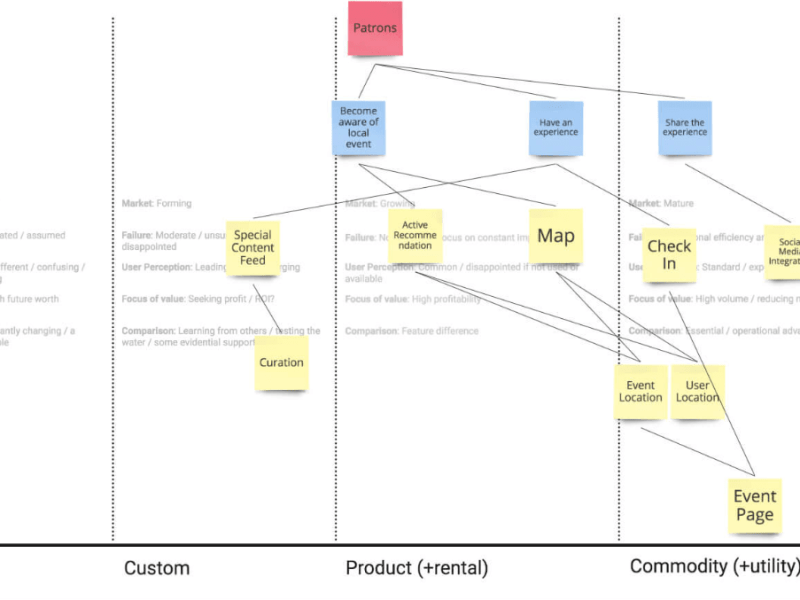
Wardley Mapping Tools and Techniques
A current list of tools for Wardley Mapping is maintained over at LearnWardleyMapping.com. This post has two main sections: A semi-serious reflection on the problem space of tools for mapping, and then a fun overview of all sorts of mapping tools and techniques, informed by discussion and sharing that took place at the inaugural Map…

Who Is the User, Really?
Thinking Globally When Constructing the Value Chain The Theory of Constraints teaches us the difference between local and global thinking with respect to systems and their performance. To think locally is to optimize each individual component of a system with the expectation that the overall result will be an optimized system. We know the opposite to…
On Strategy
“Strategy” is an interesting word in that its absence of useful meaning is directly correlated with its frequency of use, as Dave Aron describes in his book, The Essence of Strategy: People put the word strategy next to other words in order to make them sound important, but are not really clear what the word…
Batches and Iterations
The following is a rather unpolished glimpse into how we think about batch sizes and iterations. First, we expect our system to have a goal. For a software-building system made of people like ourselves, the goal is to deliver value in the form of working software. We think of “batches” as the units of work…
Buffer Management for Meal Prepping
This post describes an attempt to apply theory practically (praxis) to solve a silly little problem. My wife and I are getting serious about cutting our restaurant spending, so we have been cooking large batches of food to store and eat throughout the week. Cooking in large batches like this is a practice known as…
On Diversity
Just a few years ago, I would not have been able to articulate why organizational diversity matters. (I know that for a fact, because I once offered a barely adequate, fumbling answer during an interview. Despite somehow getting the job, I remained largely clueless for some time.) Times change, I’ve learned some things, and now…
Hidden Complexities
Originally published September 24, 2016 I consider sense-making to be a component of Landscape and Doctrine (from Sun Tzu’s Five Factors), and so I am incorporating a short overview of Cynefin into an upcoming talk on strategy. While outlining, I toyed with a few examples for the various ontological domains and learned an unexpected lesson,…
Wardley Mapping, A PowerPoint Template
UPDATE: A new template is available at LearnWardleyMapping.com. Check it out here. Originally published June 25, 2016 One particularly coherent approach to “strategy” involves using a map to pursue increased situational awareness from which to execute various forms of gameplay. This technique is known as Wardley Mapping, and I highly recommend reading through An Introduction to…
Cutting Costs. Or, How to Pretend Complex is Simple.
Originally published March 20, 2016 Suppose a company discovers that its projected revenue is below original expectations for reasons outside of its direct control. The bottom-line numbers are going to look bad, so something must be done immediately. Cost-cutting measures will be explored, and when every budget has been squeezed and nothing else remains, the…
Cynefin, Culture Change as Complex
Originally published February 27, 2016 The Cynefin framework (created by Dave Snowden) reveals that Complicated or Simple approaches break down and can only succeed by complete accident in the Complex domain, because causality is only clear in retrospect. From this basis, let’s briefly refute the notion of culture change as Simple or Complicated. If you…
Motivation Cycles
Originally published February 24, 2016 You could find the Abstract listening to hip hop My pops used to say, it reminded him of Bebop I said, well daddy don’t you know that things go in cycles Way that Bobby Brown is just amping like Michael — Excursions (A Tribe Called Quest) I work in a challenging environment…
Visual WIP
Originally published February 21, 2016 I have been searching for a temporary work visualization method to adequately convey both how a given process works and the WIP (Work In Progress) within it at any given moment. With eventual improvement set as a goal for the former, a prerequisite for any productive discussion is a common…
The Four Questions
Dr. Eliyahu M. Goldratt, in his lecture titled Beyond the Goal: Theory of Constraints, describes the necessity of answering the following questions when adopting a technology: What is the power of the technology? What limitation does it diminish? What rules helped us accommodate the limitation? What rules should we use now? As a cofounder of…
 Hired Thought